FIG. 1 — Heat pipe cross-section: outer containment wall, capillary wick layer, and central vapor core, with heat flux entering radially and exiting axially.
Overview
This was conducted as a Senior-year design project at the University of Pittsburgh Swanson School of Engineering.
Westinghouse's eVinci reactor concept uses alkali-metal heat pipes to passively move heat out of a solid reactor core — removing the need for pumped coolant loops. The insulation surrounding those heat pipes has to hold up to sustained high temperature while limiting parasitic heat loss and radial temperature gradients across the core. This project evaluated candidate insulation systems for that environment.
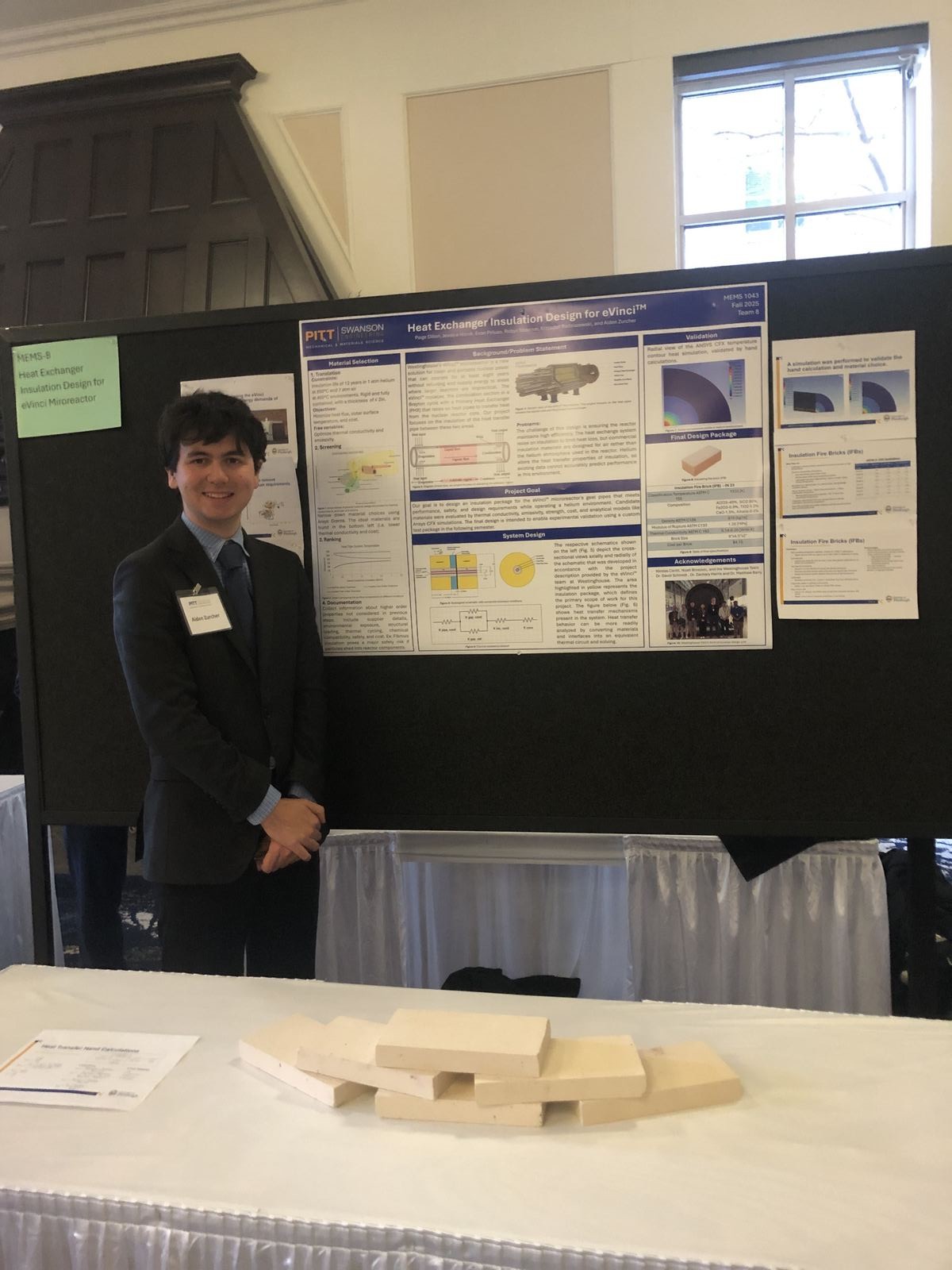
FIG. 2 — At an exposition presenting our team's work on the insulation.
Approach
- Down-selected candidate insulation materials based on operating temperature, thermal conductivity, and compatibility with reactor core materials. Used ANSYS Granta to assist.
- Built a test setup to measure effective thermal conductivity of insulation samples at representative core temperatures.
- Assessed dimensional and microstructural stability of insulation candidates after extended high-temperature exposure.
- Built a model in SOLIDWORKs, then tested it in ANSYS Fluent, and compared results to hand calculations.
Results
Our team landed on using a ceramic firebrick material for this specific part of the insulation. We created a poster and a slideshow, which we presented at an end-of-year exposition and a symposium.
Why it matters
Small Modular Reactors are the forefront of novel nuclear design. They are a complete redesign of traditional reactors, and need careful material selection choices to handle the extreme conditions.