FIG. 1 — Schematic of the binder jet process: a print carriage deposits liquid binder onto successive layers of Zircaloy-4 powder.
Overview
This project was done during the University of Pittsburgh Swanson School of Engineering Summer Undergraduate Research Internship. A previous Westinghouse study examined laser powder bed fusion, and found deleterious material that hampered Zircaloy-4 performance in nuclear reactors. Binder jetting (BJP) offers a lower-temperature, lower-residual-stress alternative, which is attractive for nuclear components where microstructure and impurity pickup are tightly controlled. This project repeated Westinghouse's analysis with binder jet printing instead.
Approach
- Characterized Zircaloy-4 powder feedstock (particle size distribution, morphology, flowability) for compatibility with binder jet spreading.
- Used a custom built miniature powder printer to test BJP in small scale.
- Printed test coupons across a range of binder saturation levels and layer thicknesses.
- Debinding and sintering trials under controlled argon atmosphere to limit oxygen and hydrogen pickup, both of which are critical for zirconium alloys.
- Evaluated green and sintered density, dimensional accuracy, and resulting microstructure via optical microscopy and SEM.
Results
I inherited the custom-built powder printer from past senior design projects. Its print head relied on repurposed inkjet dispensers, which limited the precision of binder deposition, so I spent significant time diagnosing the issue and reprogramming the printer's control software in C to improve droplet placement and repeatability. I brought the system to working order, but its precision still fell short of what nuclear-grade qualification would require, and it remained the largest source of variability in the results. I still completed full characterization of the powder feedstock and sintered material, and identified the printer precision as the key bottleneck for future work. Further testing with more precise equipment is needed to draw firm conclusions about process-microstructure relationships.
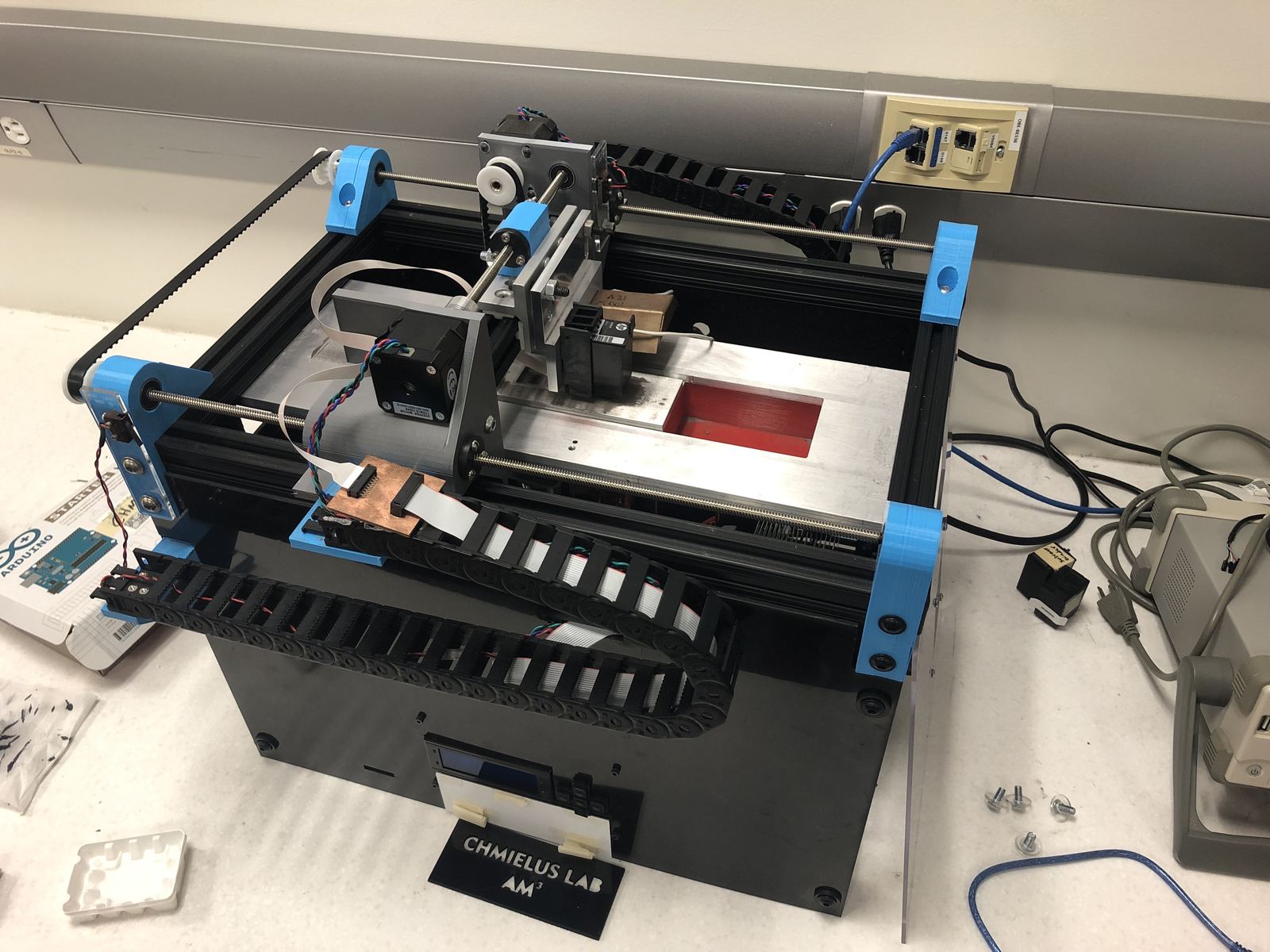
FIG. 2 — Image taken of the custom-built, miniature binder jet printer.
Due to the topic and the University funding, the precise results cannot be shared.
Why it matters
Additive manufacturing enables more flexible production methods, increasing economics. If nuclear could take advantage of this methodology, scalability and rate of innovation greatly increase.